


Video
LIFESTYLE NEWS AND VIDEOS - The cheetah may be the fastest land animal on earth, but it is quickly losing the race against extinction. Fewer than 7,500 cheetahs remain in the wild worldwide and only 9 percent of their historical range still exists.
On International Cheetah Day, Wild Africa shares a reminder that without urgent protection, Africa’s most endangered big cat will continue to disappear.
Globally, the cheetah is listed as Vulnerable on the IUCN Red List and two subspecies are even classified as Critically Endangered. They are also listed as Endangered under the Endangered Species Act in the US, and globally they are protected from the wildlife trade under Appendix I of CITES.
South Africa remains one of the most important habitats for cheetahs globally. According to a 2021 official assessment by the Department of Forestry, Fisheries and the Environment (DFFE), the country supports an estimated 1,409 of the roughly 7,500 wild cheetahs remaining worldwide.
About 419 live within 61 small to medium-sized fenced reserves, while the majority range outside formally protected areas on unfenced farmland and privately owned land. As a result, most of South Africa’s cheetahs face significant pressures in the wild.
While they contend with natural competitors like lions, hyenas, and leopards, human activity poses the greatest threat. Habitat loss confines cheetahs to smaller, isolated areas; today they occupy just 9% of their historic range, with 77% outside protected areas. This increases conflicts with livestock farmers, prey depletion, poaching, and illegal wildlife trade. Cheetahs also have low reproductive success, with wild females producing an average of only 1.7 cubs to adulthood, making population growth difficult. Another major threat to especially East African cheetah populations comes from the demand from the Middle East for cheetah cubs as exotic pets.
Peter Knights OBE, Wild Africa CEO, says, “With fewer than 7,500 cheetahs left worldwide and a host of natural challenges, it is vital we end the illicit pet trade in cheetahs and safeguard remaining habitat. These predators are not pets and pose little danger to humans. They need protection, not persecution.”
But there is hope
A powerful African conservation success example is the intervention in the Horn of Africa. The region has long been a key hotspot for cheetah trafficking, with about 300 cubs taken each year (2010-2019) for the illegal pet trade. Until recently, only about 400 cheetahs remained. The Cheetah Conservation Fund (CCF) has helped turn this tide by expanding its work across Somaliland and the wider region. They established a Cheetah Education and Training Centre Complex to host programs for rangers, farmers, land and wildlife managers, youth and local community members. This marks a shift from reactive rescue and confiscation work to proactive conservation focused on education, habitat protection and community engagement.
CCF has also partnered with Cape Town-based organisation Wild Africa and the Government of Somaliland. They launched a TV, billboard and radio public awareness campaign in Somaliland which urges the public to report smuggling and emphasizes stricter penalties.
"The cheetah’s survival is a race against time that demands immediate attention. We must act now, as every passing moment brings us closer to the point of no return," said Dr. Laurie Marker, Founder and Executive Director of CCF.
This International Cheetah Day, the public is encouraged to take action.
VIDEO - Experts talk on International Cheetah Day: Is Africa’s fastest cat running out of time?
Wild Africa shares five ways to help protect cheetahs:
- Safeguard natural habitats and give cheetahs the space they need to roam.
- Visit national parks and support conservation programs; every ticket contributes towards wildlife protection.
- Report wildlife crimes including illegal trading, snaring and trespassing into conservation spaces.
- Advocate for solutions that can reduce human-wildlife conflict, like predator-proof bomas and livestock guarding dogs.
- Share educational messaging around cheetah conservation to raise awareness.
Fun fact: Five traits that differentiate cheetahs from other big cats
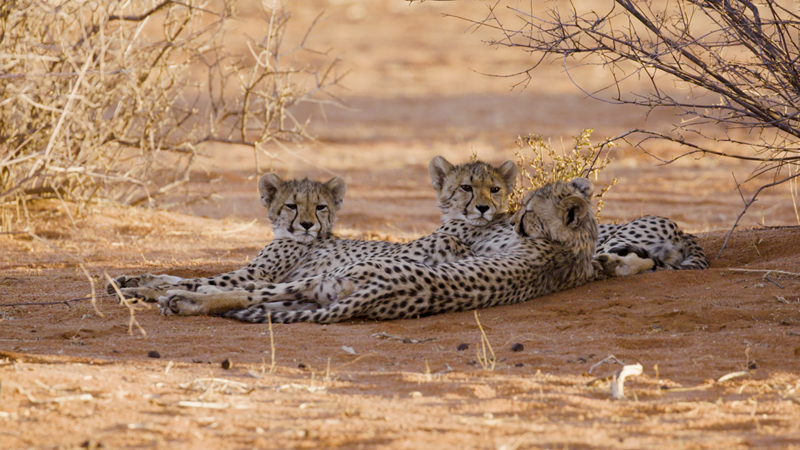
- The cheetah’s coat ranges from light tan to deep gold with solid black spots, unlike the open rosettes of leopards and jaguars.
- They have distinctive tear lines running from the eyes to the mouth help reduce glare and focus on prey over long distances.
- Their foot pads are hard and less rounded than other big cats’, acting like tyre treads to improve traction during sharp, high-speed turns while hunting.
- Unlike other big cats cheetahs are diurnal, meaning they hunt in early morning and late afternoon.
- Cheetahs can't roar like lions, tigers, leopards and jaguars. They growl when threatened and communicate through high-pitched chirps, bubbles and bark-like calls.
VIDEO - Inside the race to save the cheetah: A new campaign for survival:
‘We bring you the latest Garden Route, Hessequa, Karoo news’