

Update
NATIONAL NEWS - Following the recent deadly anti-foreigner unrest in KwaNonqaba, Mossel Bay, senior police officials have condemned xenophobic violence, defended law enforcement’s response and warned that individuals involved in attacks, intimidation and public violence will be brought before the courts.
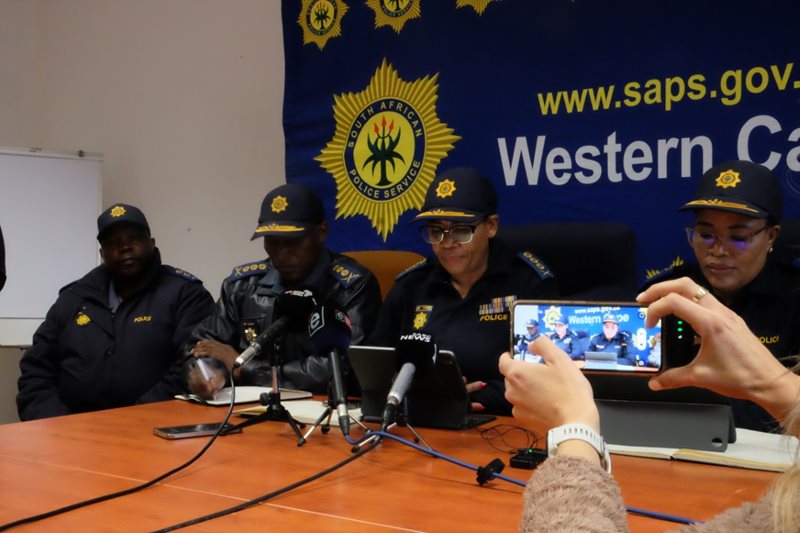
Addressing local and international media in George on Wednesday evening, 3 June, the acting national police commissioner, Lieutenant General Puleng Dimpane, the deputy national commissioner, Lieutenant General Tebello Mosikili, and the Western Cape commissioner, Lieutenant General Thembisile Patekile, outlined the ongoing security operations and measures aimed at preventing further unrest.
This briefing follows the violence in KwaNonqaba over the weekend that saw two Mozambican nationals being killed and more than 400 people being displaced. Most of the displaced persons were reported to be Mozambican nationals, while at least 10 South Africans also reportedly fled the area, saying they no longer felt safe amid the violence.
Word from acting national police commissioner, Lieutenant General Puleng Dimpane
Opening the briefing, Dimpane conveyed the South African Police Service’s condolences to the families of those who had lost loved ones during the unrest. She stressed that no grievance, frustration or disagreement could ever justify violence, intimidation, destruction of property or the taking of human life.
Dimpane said law enforcement agencies had deployed the necessary resources to the affected areas and intensified operations to restore and maintain law and order. “We are actively investigating all criminal acts related to these incidents, and those responsible will be identified, arrested, and brought before the courts,” she said.
“If you choose to march, do so peacefully, lawfully and with respect for the rights of others. No grievance, no matter how strongly felt, justifies violence.”
Rule of law
Mosikili said the National Joint Operational and Intelligence Structure (NATJOINTS) had convened the briefing to address incidents of lawlessness, public violence, vigilantism, attacks on foreign nationals and issues relating to illegal immigration. “South Africa is governed by the Constitution and the rule of law. Not by intimidation, violence, ultimatums or mob justice.”
She stressed that no individual, organisation or community grouping has the authority to take the law into its own hands, target individuals based on nationality or attempt to enforce immigration laws outside the legal framework. “The responsibilities for maintaining public order, combatting crime and enforcing immigration legislation rest exclusively with duly authorised law enforcement agencies acting within the confines of the law and the Constitution.”
Mosikili said the authorities had already acted against those involved in the recent incidents of violence.
Arrests made
In the Free State, 166 people had been arrested for offences linked to public violence and related criminal activities, while five suspects had been arrested in the Western Cape in connection with incidents involving violence and intimidation.
Mosikili also confirmed the arrest of a 23-year-old suspect in connection with the murder of the 18-year-old Nhlamulo Sambo in KwaNonqaba on Saturday 31 May. However, she said the information available to the investigators indicated that Sambo’s murder was not linked to the recent unrest in KwaNonqaba, and urged the public to refrain from speculation while the investigations continue.
Addressing the concerns about illegal immigration, Mosikili said the law enforcement agencies continue to conduct intelligence-led operations, roadblocks, compliance inspections and multidisciplinary interventions involving various government departments. She said more than 5 000 undocumented immigrants had been arrested during the past three weeks alone.
According to figures provided during the briefing, since 1 January 2026, law enforcement operations conducted across the country have resulted in the arrest of 4 798 undocumented immigrants, while 76 588 undocumented immigrants were arrested during the previous financial year. “These figures demonstrate that government is not turning a blind eye to illegal immigration,” she said.
Mosikili said foreign nationals who enter, remain or work in South Africa unlawfully expose themselves to arrest, detention and deportation processes, as prescribed by law.
She added that the operations conducted in the Southern Cape on Wednesday had resulted in the further arrests of undocumented persons. According to the police, the preliminary verification of individuals processed during the recent operations found that only 21 of 583 people screened had legal documentation, although those figures could change as the authorities continue verifying individuals’ legal status.
Violence is not activism
Mosikili emphasised that while South Africans have the right to raise concerns about, illegal immigration and service delivery challenges, those concerns could never justify criminal conduct. “There is no grievance, no concern, no frustration or cause that can justify murder, assault, intimidation, arson, looting, xenophobic attacks or any other form of criminal conduct,” she said. “Violence is not activism. Intimidation is not community protection. Criminal conduct remains criminal conduct, regardless of the cause.”
Operational intelligence
Responding to Group Editors’ enquiries about what intelligence the police possessed prior to the Mossel Bay march and the subsequent unrest, and whether there had been early warning signs that violence would erupt, Dimpane said police operations are intelligence-led, and that she was satisfied with the manner in which law enforcement had responded.
She said the operations would continue to be intensified using available intelligence, and that the authorities already had plans in place for anticipated events during June.
Mosikili added that NATJOINTS operates under a specialised intelligence and operational framework distinct from routine day-to-day policing, and works with several departments, including home affairs, to facilitate focused deployments and interventions.
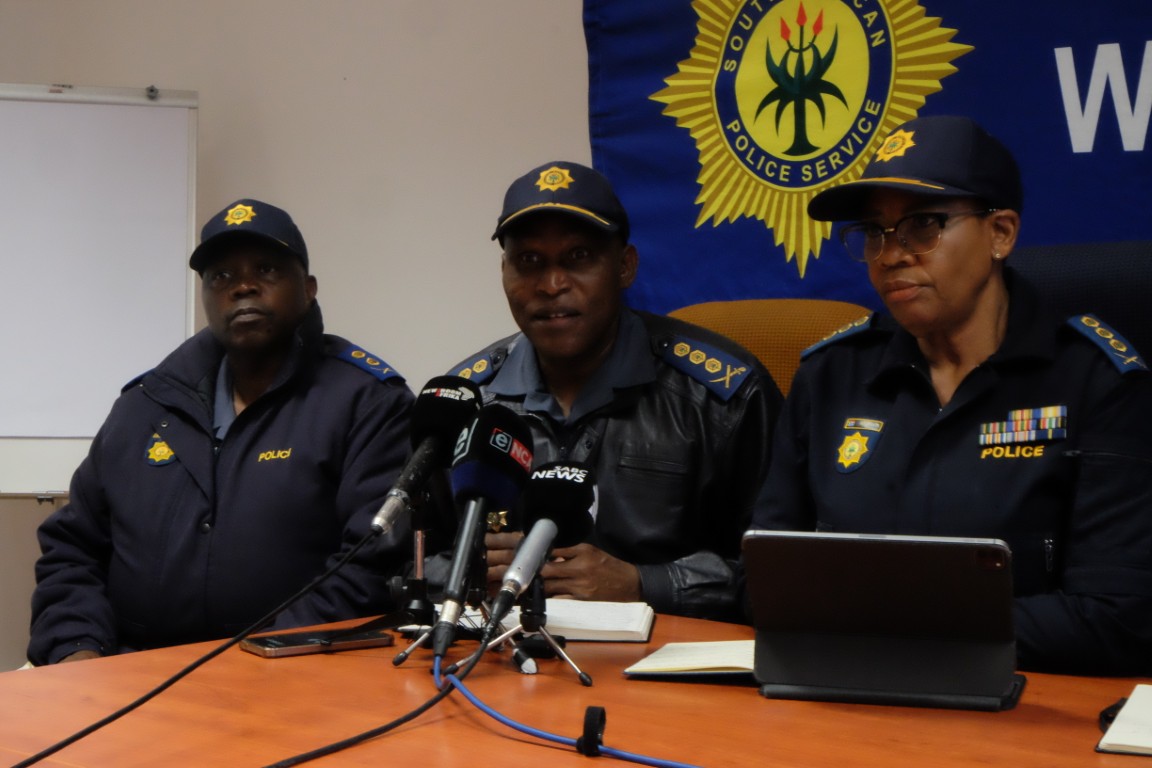 The Garden Route District police commissioner, Major General Phumzile Cetyana, the provincial police commissioner, Lieutenant General Thembisile Patekile, and the deputy national commissioner, Lieutenant General Tebello Mosikili. Photo: Marguerite van Ginkel
Tribalism
Questions were also raised about reports that tribalism may be contributing to xenophobic attacks. Patekile said the police had heard reports suggesting that some of the violence may have tribal undertones, but that no such complaints had formally been brought to their attention.
“If it is perceived, people must come forward,” he said.
Patekile noted that many South Africans living in KwaNonqaba are not Xhosa-speaking, and that some are now reportedly feeling threatened. He said some of those individuals were among the people currently being accommodated at a community hall following the unrest.
Dimpane reiterated that South Africa is guided by the Constitution and governed by the Criminal Procedure Act, which clearly outlines what is permissible under the law. She said issues of ethnicity, tribalism and discrimination are rejected unequivocally and cannot be condoned. “In this country, the Constitution dictates that there is only one right that is absolute. That is the right to life. All others have responsibilities,” she said.
She called on communities to reject vigilantism, xenophobic attacks and violence, saying the fight against crime and illegal immigration could only be won through lawful, intelligence-led and co-ordinated law enforcement operations.
Previous articles:
‘We bring you the latest Garden Route, Hessequa, Karoo news’