

LIFESTYLE NEWS - A person suffering a stroke can lose up to two million brain cells every minute while a blood vessel in the brain remains blocked.
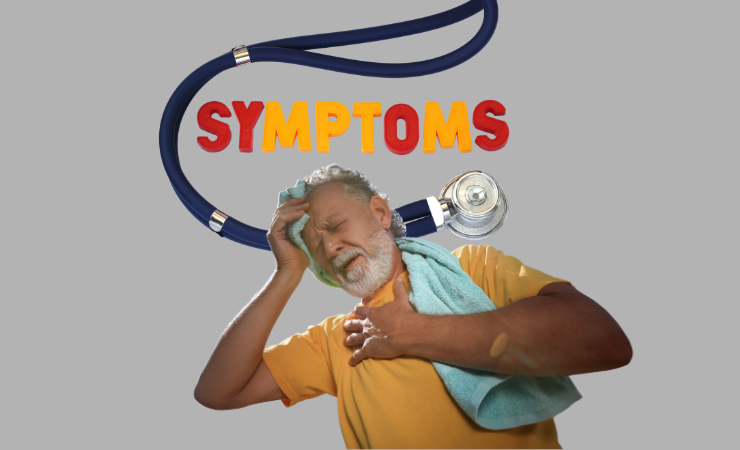
Yet many people fail to recognise the warning signs – such as sudden loss of balance, blurred vision, weakness on one side of the body or unclear speech – as a medical emergency.
As the world marks World Brain Day today, Wednesday 22 July, the Neurological Association of South Africa (NASA) is urging South Africans to learn the symptoms of stroke and act immediately.
The message is simple: time lost during a stroke can mean brain function lost.
World Brain Day is observed annually by the World Federation of Neurology and its partners. The 2026 theme, "Brain Health: Access for All," focuses on the unequal access to neurological diagnosis, treatment and rehabilitation experienced by millions of people worldwide.
More than 3.4 billion people globally live with neurological conditions, making these disorders the leading cause of ill health and disability worldwide.
Around 11 million people die every year from neurological conditions, with the greatest impact being felt in low- and middle-income countries where access to specialist care remains limited.
Professor Tissa Wijeratne, Chair of World Brain Day 2026, summarises the challenge: "Access delayed is potentially access denied."
Africa faces shortage of neurologists
Access to specialist neurological care remains a major challenge across Africa.
Previous data has shown that some African countries, including South Sudan, Eritrea, Liberia, Eswatini and Lesotho, have had no practising neurologists.
South Africa has a stronger specialist network, with just under 200 neurologists, but this remains limited for a population of more than 60 million people. Specialist services are also not equally available across all regions.
"South Africa has neurological expertise, but many communities still face significant barriers to accessing it," says Dr Patty Francis, President of the Neurological Association of South Africa and President of the Stroke Society of South Africa.
"Distance, cost, limited specialist capacity and delays in referral can all affect whether someone receives the right diagnosis and care at the right time."
According to the World Health Organization, low-income countries can have up to 82 times fewer neurologists per 100 000 people compared with high-income countries.
Stroke is one of the clearest examples of why public awareness and access to healthcare are so important.
"During a stroke, every minute matters. An estimated two million brain cells may be lost for every minute that a blood vessel in the brain remains blocked," says Dr Francis.
"The public should not wait to see whether symptoms improve. If a stroke is suspected, the person needs urgent medical assessment at an appropriately equipped hospital."
Remember to BE FAST: The warning signs of stroke
The Neurological Association of South Africa is encouraging families to remember the BE FAST stroke warning signs:
B – Balance: Sudden loss of balance or coordination
E – Eyes: Sudden blurred, double or lost vision
F – Face: One side of the face droops or feels numb
A – Arms: One arm becomes weak or numb
S – Speech: Speech becomes slurred, confused or difficult
T – Time: Call emergency medical services immediately
Some patients experiencing an ischaemic stroke, caused by a blood clot, may benefit from clot-dissolving treatment if they reach an appropriately equipped hospital quickly enough.
The commonly referenced treatment window is within 4½ hours from the start of symptoms, but specialists warn this should never be seen as time available to delay seeking help.
"The 4½-hour window must never be interpreted as permission to wait," says Dr Francis.
"The sooner a person reaches appropriate care, the better the opportunity for assessment and potentially life-saving treatment."
Up to 90% of strokes linked to preventable risk factors
Although stroke is a medical emergency, many strokes may be prevented.
Up to 90% of strokes are linked to potentially modifiable medical and lifestyle risk factors, including:
• High blood pressure
• Diabetes
• High cholesterol
• Heart disease
• Smoking
• Physical inactivity
• An unhealthy diet
• Harmful alcohol consumption
High blood pressure, or hypertension, remains one of the leading risk factors for stroke. It is often followed by conditions such as diabetes, high cholesterol and heart disease.
These conditions can be identified, treated and controlled – but hypertension frequently has no obvious symptoms, meaning many people remain unaware of their risk.
"Improving access to brain healthcare does not begin only in a neurologist's consulting room," says Dr Francis.
"It begins in our communities – with blood-pressure screening, early identification and treatment of diabetes and high cholesterol, healthier lifestyles, awareness of stroke symptoms and clear referral pathways."
Prevention starts at primary healthcare level
International programmes such as the World Health Organization's HEARTS technical package aim to strengthen cardiovascular disease and stroke prevention at primary healthcare level.
The HEARTS approach focuses on six key areas:
H – Healthy-lifestyle counselling: Helping people understand and reduce behavioural risk factors.
E – Evidence-based treatment protocols: Improving management of conditions such as hypertension and diabetes.
A – Access to essential medicines and technology: Improving availability of necessary treatments and equipment.
R – Risk-based cardiovascular disease management: Assessing and managing overall cardiovascular risk.
T – Team-based care: Strengthening cooperation between healthcare professionals.
S – Systems for monitoring: Using data to improve prevention and management.
"Programmes such as HEARTS show that specialist shortages do not mean nothing can be done," says Dr Francis.
"Prevention, screening and effective management of risk factors can begin at primary healthcare and community level."
Experts also highlight that environmental factors, including air pollution, are increasingly recognised as contributors to stroke risk, showing that brain health is not only a medical issue, but also a social and environmental concern.
Children are helping families recognise strokes
An international initiative is also teaching primary-school children how to recognise stroke symptoms in parents and grandparents.
The FAST Heroes programme uses cartoons, workbooks and online learning to help children identify stroke warning signs and understand the importance of getting help quickly.
Because children often spend time with older family members, they may be present when stroke symptoms first appear.
"A child who recognises a grandparent's drooping face or slurred speech and calls for help could contribute to saving that person's life," says Dr Francis.
"Brain-health education should reach beyond hospitals and into homes, schools and communities."
Access delayed can mean ability lost
Access to neurological care is not only about survival. Delays in diagnosis and treatment can affect a person's ability to walk, speak, work, learn and live independently.
On World Brain Day 2026, the Neurological Association of South Africa is calling for:
• Greater public awareness of neurological symptoms
• Earlier diagnosis and referral
• Better identification and management of preventable risk factors
• Improved access to neurological care in underserved communities
• Greater public knowledge of stroke-ready services
• Stronger primary healthcare and community-level prevention
• Brain-health education in schools and communities
"Brain health should not depend on where a person lives or what they earn," concludes Dr Francis.
"Knowing the warning signs is important, but awareness must be matched by timely access to the right care. Access delayed can mean life, independence and ability lost."
‘We bring you the latest Garden Route, Hessequa, Karoo news’