

FORMULA RACING NEWS - Formula racing is the most expensive sport in the world. Even karting, where future Formula 1 drivers get their start when they’re only five or six, is already so expensive that most South African parents can’t even think about giving their kids that opportunity.
But a lot of the most valuable skills on the track are things some kids naturally have, which means that with so few getting a shot, South Africa’s greatest potential might never even get to sit in a kart.
Karting gets expensive really quickly. If you’re lucky, you could find a used Bambino kart for R10,000, but the absolute minimum gear you’ll need could still cost R5,000 second-hand and double that new.
A new Bambino kart starts at around R65,000 to R70,000, and karts get more expensive as you move up, going to over R200,000 for a DD2 kart.
That’s just the kart and gear. The problem is that you still need transport, tyres, repairs, coaching, a technical support team, national events, and access to a full team if you want to compete properly and make it into Formula 4 and beyond.
This isn't just a South African problem. Lewis Hamilton said the same thing when he spoke to the media recently at Monaco GP. He said that karting has gotten so expensive that talent isn't what decides who makes it through anymore, money is.
I know how much difference support makes because I’ve had to work for every step, and I still needed the right people around me to make those steps possible.
Through WORR Motorsport, I found a place to develop and prove myself, and I put in the work to be ready for the coaching and opportunities that came after that.
Right before I turned 16 this year, I was invited to the international More Than Equal female driver development programme to train for Formula 4. Even then, moving up is still not something a young driver can do alone. Every step needs backing, travel, testing, tyres, and coaching.
That’s also why I try to give back where I can. I now coach younger karters through Karting Africa and the WORR Academy, and I see that as part of helping more children in South Africa and across Africa find a way into the sport.
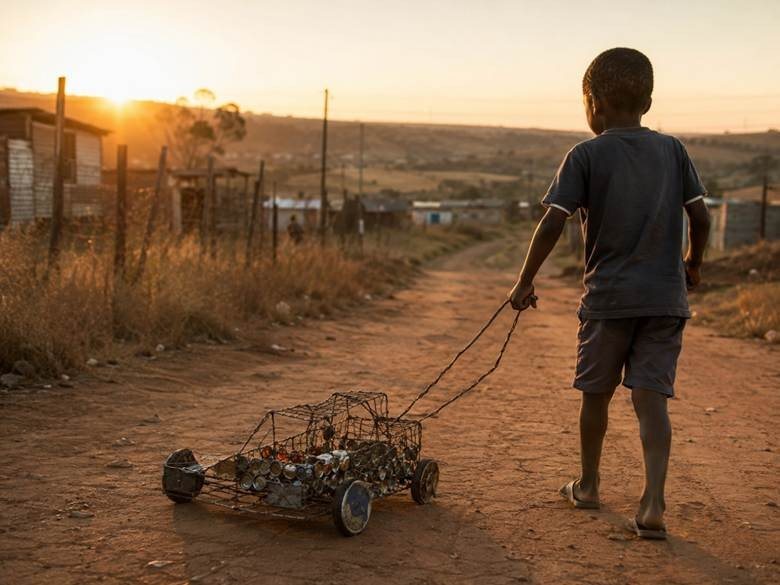
But none of that’s an option for a kid living in rural South Africa. If they want to play football, rugby, or netball, all they need is a ball, or a friend with one, and a community or school field. Most sports only need the basics, and many kids don’t even have access to those. For motorsport? Where does a child go to race after school?
Young driver development must reach into rural parts of the country
There's already proof that things can work differently. WORR Motorsport has built a programme now running in eight African countries, taking kids who've never seen a kart in their lives and giving them a real first shot at one. It's not the whole answer, but it shows the gap can be closed, not just talked about.
Beyond this, there is a lot more the larger racing community can do to build on that. Teams, karting clubs, sponsors, and national motorsport organisations could work with schools and communities to run rural talent days for children who would never normally get near a track.
These don’t have to be full race days. They could start with reaction tests, coordination drills, simulator sessions, basic driving control, and short, safe introductions to karting where possible.
The point would be to look for the natural skills that make for a potentially great racer. From what I ‘ve seen as a driver and now as someone helping coach younger karters, those signs can show very early when a child gets the right chance.
The children who stand out could be invited to proper karting sessions, with transport, gear, coaching, and track time covered.
The most promising drivers could then move into a sponsored development group, where they’re given a real chance to keep improving.
There are other ways in, too. Clubs and sponsors can create shared kart and gear banks so young drivers do not have to own everything from the start. Schools, municipalities, and community centres can introduce basic racecraft through simulator sessions, while regional development hubs can help promising children train closer to home.
There are so many ways to get children more involved and give them access, but it’s going to take a national movement that puts more inaccessible sports like motorsport at the front.
My dream is that every child who wants to see if they have what’s needed to win a track day get a chance, and I hope that as I continue my own racing career, I can help inspire the change we need in this country.
‘We bring you the latest Garden Route, Hessequa, Karoo news’