


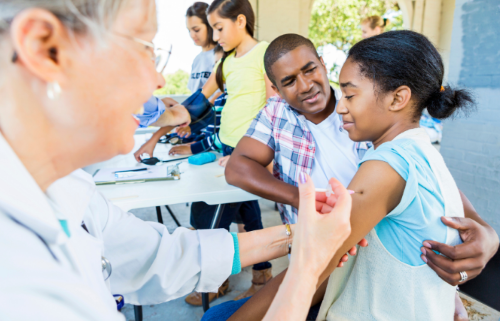
EASTERN CAPE NEWS - Sanofi and the United Nations Children’s Fund (UNICEF) have partnered to improve access to routine childhood immunisation in three Eastern Cape districts, with a focus on children who have not received or completed their recommended vaccines.
The Immunisation for Every Child programme will support health teams in OR Tambo, Alfred Nzo and Amathole to identify areas with low vaccination coverage, track children who miss appointments and respond more quickly when routine immunisation services do not reach communities.
The programme will run from July 2026 to March 2027, beginning with engagements involving national and provincial health authorities, followed by healthcare worker training, mentoring and ongoing supervision.
Eastern Cape districts targeted to close immunisation gaps
Health teams will use local vaccination data to identify communities where children are being missed and strengthen routine immunisation services.
Working with the National and Eastern Cape Departments of Health, Sanofi and UNICEF will use the World Health Organization’s Reaching Every District (RED) strategy to address immunisation gaps.
The RED strategy aims to achieve immunisation coverage of at least 80% in every district and 90% nationally.
The programme comes as South Africa works to reverse declines in childhood immunisation coverage and address persistent inequalities in access to routine vaccines.
South Africa sees decline in childhood vaccination coverage
WHO and UNICEF estimates show a significant decline in South Africa’s routine DTP vaccination coverage since 2019.
The latest WHO and UNICEF estimates indicate that national coverage for the first dose of the DTP vaccine, commonly used as an indicator of access to routine childhood immunisation, fell from 87% in 2019 to 67% in 2025.
Third-dose coverage declined from 85% to 65% over the same period.
This suggests that around one in three infants in South Africa may not have received a first routine DTP-containing vaccine in 2025, while an even greater proportion may not have completed the recommended three-dose course.
WHO and UNICEF note that the figures rely largely on administrative data and may not capture all vaccinations provided through the private healthcare sector.
“Every child should have access to routine vaccines, regardless of where they live or their family's circumstances,” said Jean-Baptiste Bregeon, Country Lead for Sanofi South Africa.
“This partnership will help local health teams find children who have been missed and build the capacity needed to protect them. It reflects Sanofi's commitment to improving healthcare access in underserved communities.”
Programme targets zero-dose and partially vaccinated children
The initiative will focus on children who have never received a first DTP-containing vaccine as well as those who started but did not complete their vaccination schedules.
WHO and UNICEF define zero-dose children as those who have not received a first dose of a DTP-containing vaccine.
The programme will also target children who have started their routine immunisation schedules but missed subsequent doses.
“Every child missed by routine immunisation represents a child left unnecessarily vulnerable to preventable disease,” said Johannes Wedenig, UNICEF Representative in South Africa.
“While immunisation coverage varies across South Africa, district averages can mask communities where children are still being missed. Our focus on OR Tambo, Alfred Nzo and Amathole will allow us to work with health teams to identify these gaps, understand why children are being missed and strengthen services to reach them.”
Reaching every district strategy focuses on five key areas
The WHO-backed RED approach combines stronger outreach services, healthcare worker support, community engagement and better use of local vaccination data.
The strategy focuses on:
- Restoring and strengthening outreach immunisation services.
- Supporting and supervising healthcare workers.
- Building stronger links with communities.
- Using local data to guide immunisation activities.
- Improving local planning and resource management.
According to WHO, the RED strategy contributed to an increase in third-dose DTP coverage across Africa from 57% in 2000 to 80% in 2014.
Health teams to receive training and on-the-ground support
Three RED strategy consultants will work directly with district health teams and healthcare facilities to strengthen planning and immunisation delivery.
The consultants will provide practical support and mentoring, helping facilities to improve microplanning, map communities, identify children who have missed vaccinations and organise targeted outreach in affected areas.
Activities will take place at provincial, district, facility and community levels.
These will include healthcare worker training, supportive supervision, stakeholder engagement, advocacy and quality improvement initiatives.
Partnership aims to strengthen routine immunisation beyond 2027
Sanofi and UNICEF say the programme is designed not only to find children who have been missed, but also to strengthen local health systems for the future.
By improving healthcare worker skills, strengthening the use of local immunisation data and working directly with communities to understand and overcome barriers to vaccination, the partnership aims to help health teams reach more children.
The partners also hope to strengthen routine immunisation services so that improvements continue beyond the funded programme period.
Lessons learned from the initiative in OR Tambo, Alfred Nzo and Amathole will also help inform approaches to closing immunisation gaps in other parts of South Africa.
References
- World Health Organization, United Nations Children’s Fund. South Africa: WHO and UNICEF estimates of immunization coverage: 2025 revision [Internet]. Geneva: World Health Organization; 2026 [cited 2026 Jul 17].
- United Nations Children’s Fund. WHO and UNICEF estimates of national immunization coverage: 2024 revision notes [Internet]. New York: UNICEF; 2025 [cited 2026 Jul 17].
- World Health Organization. Reaching Every District (RED) [Internet]. Geneva: World Health Organization; [cited 2026 Jul 17].
‘We bring you the latest Garden Route, Hessequa, Karoo news’