

GRAAFF-REINET NEWS - The Karoo Origins Fossil Centre, a leading educational and research facility showcasing the remarkable palaeontological and geological heritage of the Karoo, celebrated its first anniversary on 3 April.
The centre is led by Professor Bruce Rubidge, former head of the Evolutionary Studies Institute at the University of the Witwatersrand, where he served for more than 30 years.
It functions as a field base for both local and international scientists conducting research on the Karoo’s unique rock formations and fossil record.
Visitors to the centre can explore a world-class fossil display that tells the geological story of the Karoo, including the origins of dinosaurs, tortoises, crocodiles, and particularly mammals.
Central to the exhibition is the internationally renowned Rubidge Fossil Collection, which was housed on the family farm, Wellwood, for 91 years.
The collection dates back to the 1930s, when farmer Sidney Rubidge developed a passion for palaeontology.
According to family accounts, his interest was sparked in 1934 when his ten-year-old daughter, Peggy, asked: “Daddy, what are fossils?”
This led to a family outing on the farm, where they discovered the remarkably complete skull of a large flesh-eating therapsid - a new species later named Dinogorgon rubidgei.
During the 1930s and 1940s, the Rubidge collection expanded significantly and played a key role in advancing understanding of Permian and Triassic animals in southern Africa.
Today, it includes 107 holotype specimens - the original examples used to describe new species.
Rubidge noted that the collection contains a wide variety of fossil ‘reptiles’ that lived between 260 and 250 million years ago.
The rocks of the Karoo Supergroup, formed between 300 and 180 million years ago, are globally recognised for their rich fossil record from the time of the supercontinent Gondwana.
Beyond research, Karoo Origins also plays an important educational role, helping the public understand past mass extinctions while prompting reflection on the potential outcomes of the current sixth extinction.
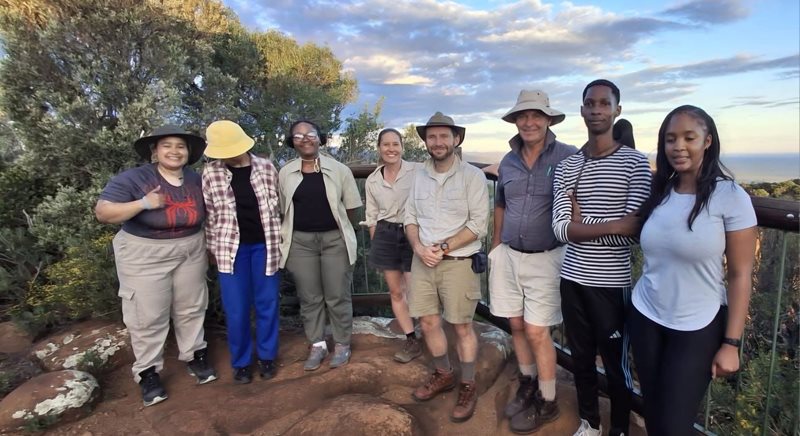
“From young explorers to passionate fossil enthusiasts, it has been a privilege to share this journey with everyone who has walked through our doors,” said Rubidge.
“Teams have worked tirelessly - from the Fossil Lab to our Education Centre - carefully preparing specimens, developing programmes, and bringing ancient stories to life in meaningful ways.”
For more information, Professor Bruce Rubidge can be contacted at [email protected] or Marina Rubidge at [email protected].
‘We bring you the latest Garden Route, Hessequa, Karoo news’