

Every January, we tell ourselves a familiar story: This year will be different. We'll eat better, move more, manage stress, sleep properly - the list varies depending on what our lives need most. Yet many find their initial plans don't hold up past february.
The challenge isn't a lack of discipline or willpower, but a mismatch between the goal and the method.
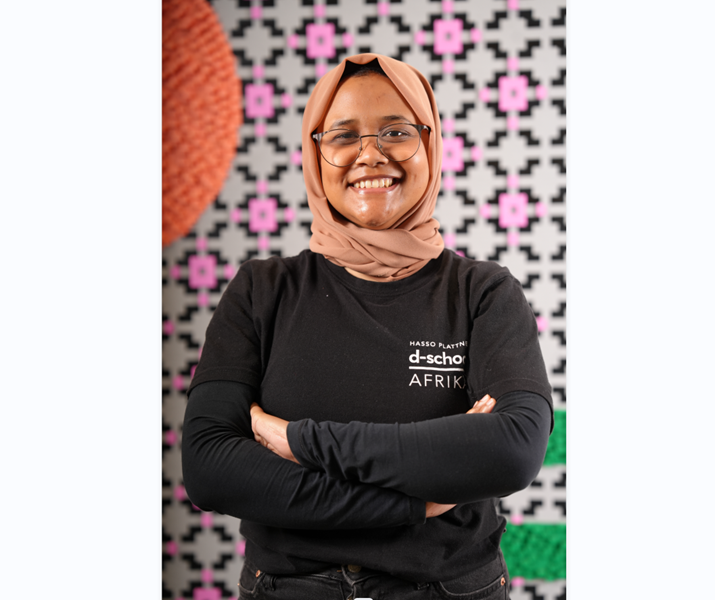
“We often set ambitious, all-or-nothing goals and then feel frustrated when they clash with our complex, ever-changing lives,” says Gadija Petersen, a Programme Lead at the Hasso Plattner d-school Afrika at the University of Cape Town. “Most people pick a bold outcome and expect transformation to happen overnight. But what if, instead of forcing rigid routines on ourselves, we approached personal change like designers approach solutions - with curiosity, flexibility, and iterative experimentation? In design, no one expects the first version of a product to be perfect; it takes testing, learning, and refinement. Our personal growth deserves the same creative, iterative process.”
This shift in thinking starts with asking better questions.
Reframing the Question
Rather than asking, Why can't I stick to my goals? Petersen suggests that a more productive question might be: Am I solving the right problem in the first place?
“Many people approach behaviour change as if there's one correct answer,” she explains. “But our lives and contexts shift constantly. That's why rigid, one-size-fits-all plans tend to fracture under pressure. Design Thinking teaches us to work with complexity, not against it. “
This also means recognising what's within our sphere of influence and what isn't. Petersen points to “Gravity Problems”, which are circumstances you cannot change, like a law of physics. “Your age, past decisions, or the economy are not problems to solve, but to design around. Wasting energy there prevents you from focusing on what you can influence.”
A Five-Step Process for Designing Sustainable Change
She offers a practical framework, rooted in the core principles of Design Thinking, to build habits that stick long after January has passed.
- Empathise: What do I really need? Before setting a goal like “exercise more”, ask "why?" Is the deeper need to reduce anxiety, have more energy for your kids, or improve sleep? Understanding the core human need is the essential first step. Without this, we risk creating solutions that look good on paper but don't integrate into real life.
- Define: What problem am I actually solving? Reframe vague aspirations into clear, actionable problem statements. Not “I need to work out every day” but “I need 15 minutes to move my body, so I feel less tense”. Specificity creates direction.
- Ideate: What are all the possible ways I could address this? Generate multiple options, not one perfect plan. A morning walk, a midday stretch break, a short YouTube video at home, a dance session with your children. Having options reduces pressure and increases the likelihood of finding something sustainable.
- Prototype: Can I test this before I fully commit? Rather than overhauling your entire life on 1 January, run small experiments. Try a 15-minute walk for one week. The next week, try one online yoga class. This aligns with the principle of 'atomic habits' - making changes so small they are easy to integrate, build momentum, and stick.
- Iterate: What did I learn, and what needs adjusting? At the end of each prototype, check in. What felt good? What didn't? What integrated naturally into your day? Use this feedback to refine your approach. Maybe the morning walk was a perfect fit, or perhaps it needs to be after work.
From Setback to Signal
This iterative approach changes how we interpret our own behaviour. Rather than judging ourselves when something doesn't work, we can treat it as valuable information.
“In Design Thinking, when a prototype doesn't perform as expected, we get curious about why,” explains Petersen. “What if we took the same approach with ourselves? Missing a workout becomes feedback. Pausing a routine becomes a signal that the design needs refinement. It's about trying something, observing what works, and leaning into what you naturally want to return to. It's an ongoing conversation with yourself, not a test you pass or fail.”
This mindset shift, from judgment to curiosity, is what makes change sustainable.
“Real change happens when we design a life that actually feels good to live,” she concludes. “It begins not with pressure or perfection, but with empathy, curiosity, and small experiments we can learn from. And that's a framework that works all year long, not just in January.”
About the Hasso Plattner d-school Afrika at the University of Cape Town (UCT)
The Hasso Plattner d-school Afrika at the University of Cape Town (UCT) is the only dedicated academic institution on the continent offering academic training and capacitation in Design Thinking to university scholars and professionals in the public and private sectors. The d-school Afrika aims to empower people from all over the African continent to embrace a design-led thinking mindset to create human-centred solutions that meet the demands of an ever-changing planet. By offering experiential training, guiding the practical application of Design Thinking within organisational structures, and making programmes relevant to modern-day challenges, the d-school Afrika is producing a calibre of African thought leaders whose contributions can change the continent – and the world. For more information, go to https://dschoolafrika.org .