



LIFESTYLE NEWS - The first-ever autistic Barbie doll was created to represent common ways autistic people may experience, process and communicate about the world around them.
Developed for more than 18 months in partnership with the Autistic Self Advocacy Network (Asan), a non-profit disability rights organisation run by and for autistic people, this doll joins the Barbie Fashionistas collection, which features the most diverse range of skin tones, hair textures, body types and various medical conditions and disabilities.
“Barbie has always strived to reflect the world kids see and the possibilities they imagine, and we’re proud to introduce our first autistic Barbie as part of that ongoing work,” said Jamie Cygielman, Global Head of Dolls at Mattel.
“The doll helps to expand what inclusion looks like in the toy aisle and beyond because every child deserves to see themselves in Barbie."
She said the Barbie design team made intentional design choices for the autistic Barbie doll to authentically reflect some experiences individuals on the autism spectrum may relate to.
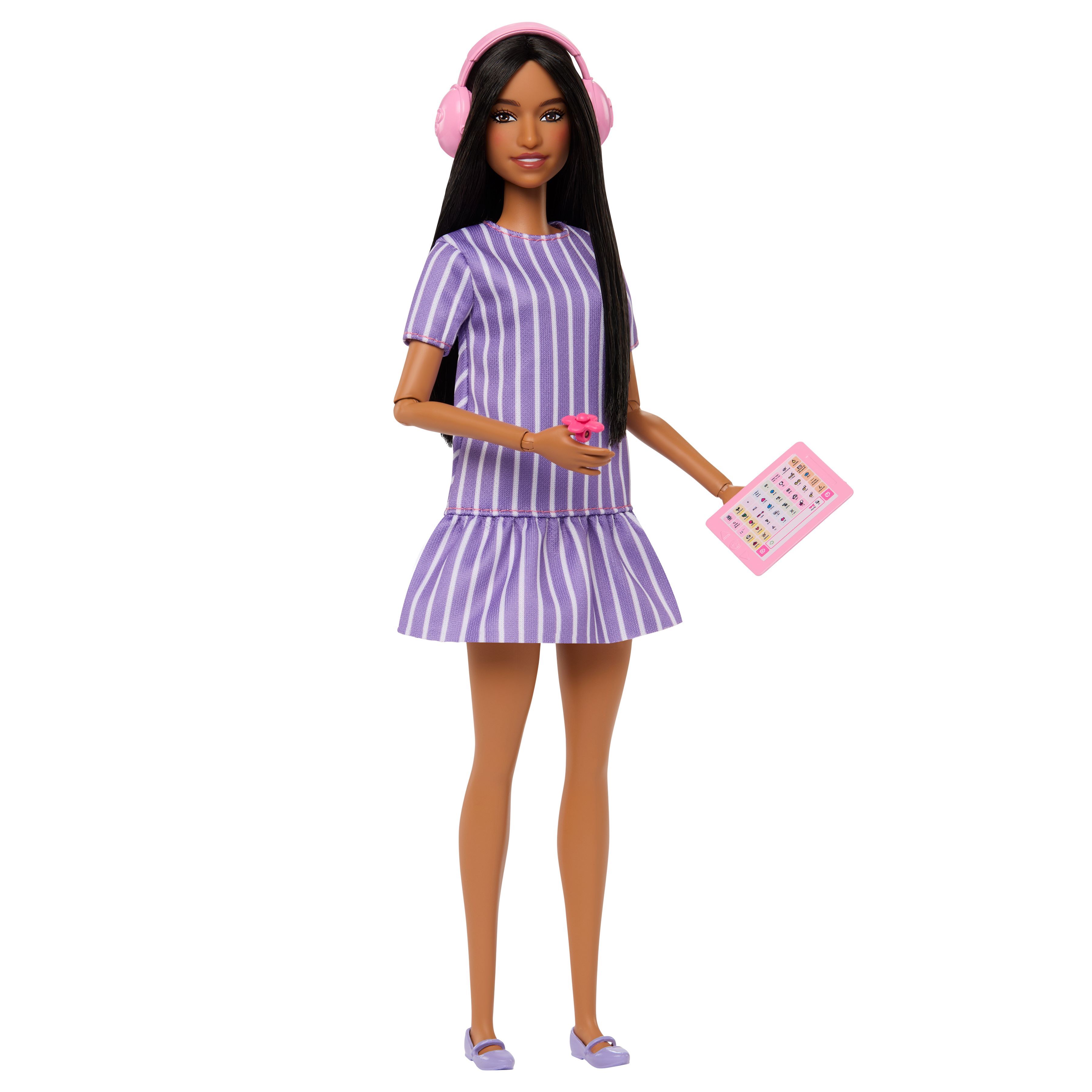 Accessories include headphones, a finger fidget and a tablet.
The autistic Barbie doll features and accessories include:
Face and body
Along with a new face sculpt, the autistic Barbie doll features elbow and wrist articulation, enabling stimming, hand flapping, and other hand gestures that some members of the autistic community use to process sensory information or express excitement.
Eye gaze
The doll is designed with an eye gaze shifted slightly to the side, which reflects how some members of the autistic community may avoid direct eye contact.
Accessories
- Fidget spinner: The doll holds a pink finger clip fidget spinner that actually spins, offering a sensory outlet that can help reduce stress and improve focus.
- Headphones: Pink noise-cancelling headphones rest on top of the doll’s head as a helpful and fashionable accessory that reduces sensory overload by blocking out background noise.
- Tablet: A pink tablet showing symbol-based Augmentative and Alternative Communication apps (AAC) on its screen serves as a tool to help with everyday communication.
Sensory-sensitive fashions
The doll wears a loose-fitting, purple pinstripe A-line dress with short sleeves and a flowy skirt that provides less fabric-to-skin contact. Purple shoes complete the outfit, with flat soles to promote stability and ease of movement.
“As proud members of the autistic community, our Asan team was thrilled to help create the first-ever autistic Barbie doll. It is so important for young autistic people to see authentic, joyful representations of themselves and that’s exactly what this doll is,” said Colin Killick, executive director of Asan.
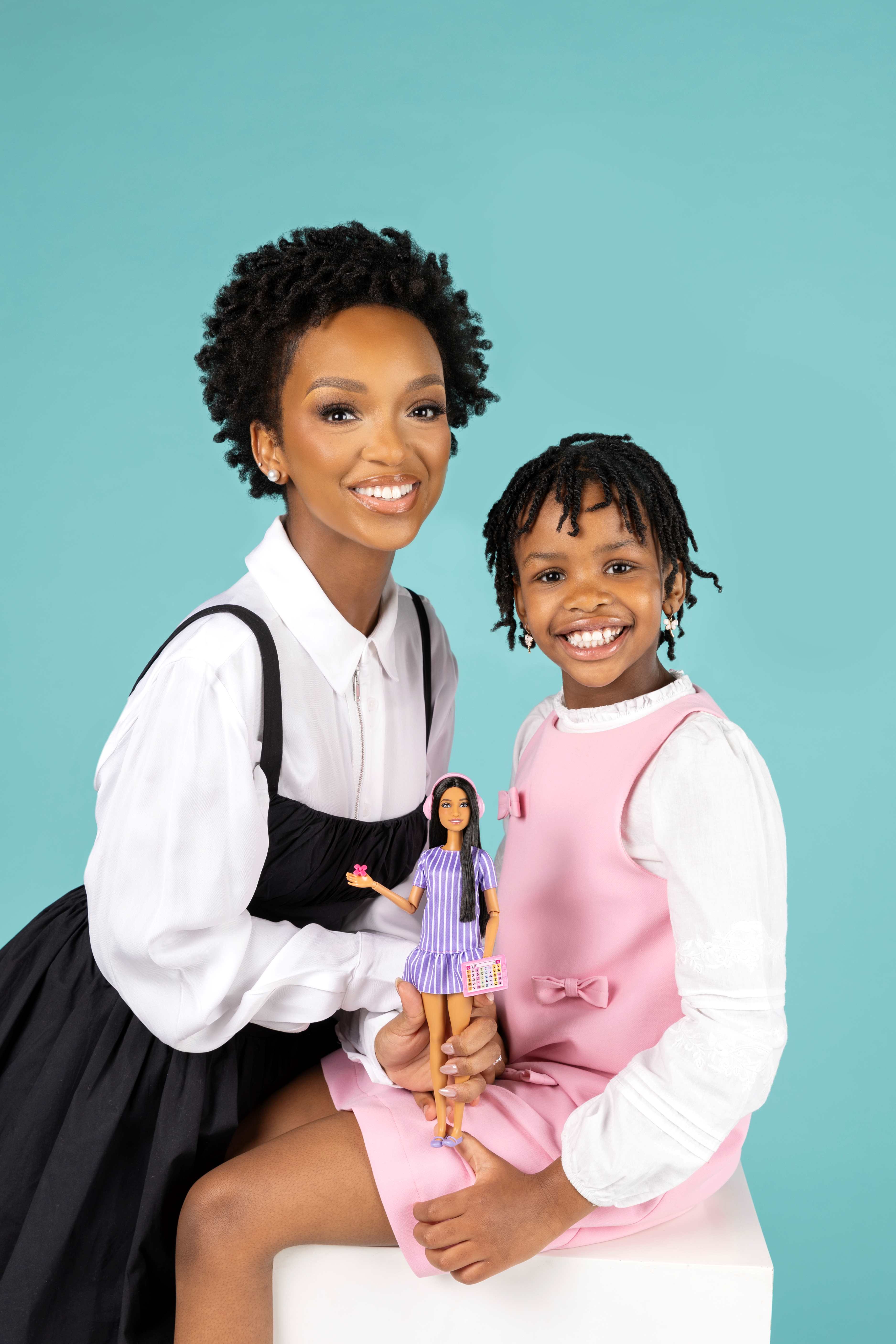 Nandi Madida and her beautiful daughter, 6 year-old Nefertiti Madida.
As part of the doll launch, Barbie is teaming up with advocates for the autistic community, including autism advocate, founder of Africa’s number one parenting and family podcast, The Motherhood Network, Apple Music host and Creative Councillor at the Gates Foundation, Nandi Madida and her beautiful daughter, 6 year-old Nefertiti Madida.
“Barbie has always represented comfort and imagination for me and becoming a mother to an autistic child has transformed what representation truly means. This autistic Barbie is deeply emotional because it reflects children who are so often left out.
"For autistic children, seeing themselves in a doll like this affirms that they are seen, valued and understood exactly as they are. For non-autistic children, it becomes a gentle and powerful tool for learning empathy, curiosity and respect.
"Play is one of the earliest ways children make sense of the world, and when that world includes neurodiversity, it helps build a future that is more compassionate, informed and inclusive for everyone,” says Madida.
Consistent with the Fashionistas dolls representing individuals with type 1 diabetes, Down syndrome and blindness, the autistic Barbie doll was named and created with the community’s guidance to allow more children to see themselves in Barbie.
In 2020 Barbie set out to research the short- and long-term benefits of doll play through a multi-year study with researchers at Cardiff University, finding that playing with dolls activates parts of children’s brains involved in empathy and social processing skills.
In recent years, the study has continued to build on these findings, suggesting that doll play could help develop social skills for all children, including those who display neurodivergent traits commonly associated with autism.
‘We bring you the latest Garden Route, Hessequa, Karoo news’