



AGRICULTURE NEWS - 100 000 doses of Aftodoll Foot-and-Mouth Disease (FMD) vaccine arrived at Cape Town International Airport last night.
It is an oil-based, inactivated trivalent vaccine covering SAT1, SAT2, and SAT3 strains used for the protection of cattle, sheep, goats and other livestock.
According to Regan Thaw, spokesperson of Western Cape Premier Alan Winde, the South African herd totals about 14 million cattle while there are about 458 000 cattle in the Western Cape.
Compared to water-based vaccines, oil-based vaccines like Aftodoll stimulate a longer immune response of up to 9 months, but still require a booster to maximise antibody levels.
The ongoing vaccination drive will be steadily scaled up to fully immunise the provincial herd.
Progress update:
- 48 612 animals have so far been vaccinated across the province
- 276 vaccination sites have been set up
- 29 private veterinarians are assisting state veterinarians
- The Western Cape has now received a total of 162 120 doses of vaccines.
- Warning road signs have been erected along all major highways which link the Western Cape to neighbouring provinces
- Checkpoints have been set up along several major roads
In a statement released this morning Premier Winde and EC Minister of Agriculture, Economic Development and Tourism, Dr Ivan Meyer, they say that since the first cases of FMD were confirmed in the Western Cape, the provincial government has pulled out all the stops in bringing the outbreak under control.
They say this coordinated effort is made possible by support from key stakeholders, including the Milk Producers Organisation, Red Meat Producers, Milk SA, Agri Western Cape and Shoprite.
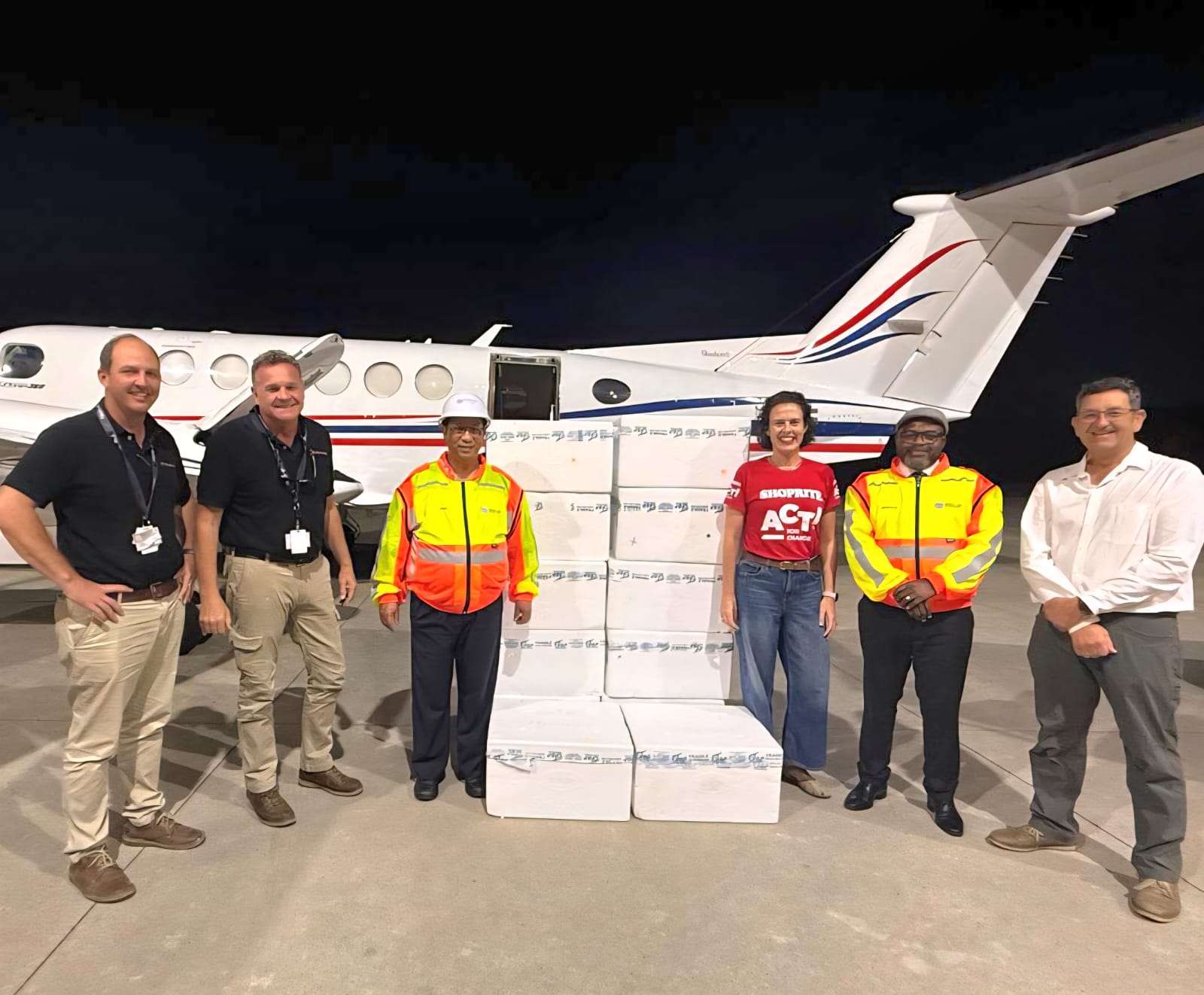 From left are the pilots (names unknown) Minister Ivan Meyer, Adele Kruger of ShopRite, Dr Mogale Sebopetsa and Chris Fourie of the Dairy Management Consultancy.
The WC Government 21-point FMD response plan includes:
- Movement control, including 24/7 border monitoring.
- Monitoring, surveillance, and traceability, through on-the-ground rapid response from provincial veterinary services.
- Protocols such as communication, by-law enforcement, and contingency plans.
- Recovery involving cleaning operations and monitoring quarantine areas.
"All of this progress is made possible through collaboration,” said Winde. He commended all agricultural role players for their ongoing assistance in managing the outbreak.
“We will continue to intensify the response plan to protect this critical sector of our economy.
"I personally chair a weekly joint operation meeting with all stakeholders, including municipalities, to ensure that everything is being done to manage this crisis.
"In everything we do, we aim to protect growth, livelihoods and jobs.”
Working tirelessly
Meyer echoed the Premier’s gratitude to every role player who has worked tirelessly to bring this outbreak under control. "Your dedication is the backbone of our collective progress.
"The arrival of the 100 000 additional vaccine doses in the Western Cape marks a significant turning point. It means we can now accelerate vaccinations across the province, ensuring that we protect our livestock, support our farmers, and strengthen this vital sector of our economy,” he said.
Winde said he is in regular contact with national Minister of Agriculture, John Steenhuisen, to follow up and ensure that a livestock movement permitting system is put in place to further bolster the Western Cape containment plan.
‘Ons bring jou die nuutste Tuinroete, Hessequa, Karoo nuus’