


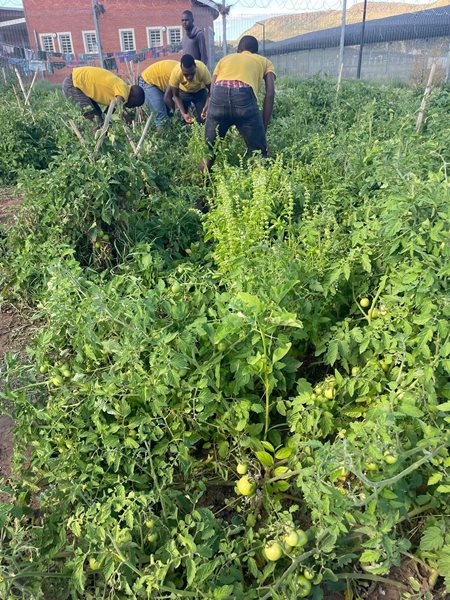
BURGERSDORP NEWS - The Shiloh gardens, recently launched in Burgersdorp by guest house owner Alna Retief, is a community-driven project aiming to establish 12 faith-based gardens in the Eastern Cape, promoting dignity, food security and sustainability.
Retief shared that Shiloh was an ancient gathering place for the 12 tribes of Israel, symbolising unity, peace and divine provision.
The project honours this heritage by creating 12 gardens representing each tribe, embodying spiritual and practical principles.
Shiloh signifies a place of rest, God’s dwelling, and community unity, inspiring modern community gardens.
“We will aim to establish 12 gardens across 12 Eastern Cape communities, fostering peace, purpose, and provision.
Gardens will be tailored to each community’s needs, culture and resources.
The model emphasises empowerment, ownership, biblical farming practices, measurable impact and tranquillity,” she says in her introduction.
“Community tailoring, empowerment, financial dignity, farming God’s way, impact measurement, and tranquillity will be used throughout this initiative.
1m x 2m beds for crop rotation and sustainable farming will focus on accessible tools: soil, seed, manure and mulch, which we have around us; holistic growth - spiritual and practical.”
Retief explained that the tribe of Asher is a youth facility with harvest sales funding youth independence, while the tribe of Naphtali is a local school garden feeding 1 000 children, where they are also teaching business skills.
“Other tribes (Manasseh, Joseph, Ephraim) are in development, targeting community support and food security.
And we have also formed partnerships with old age homes and community centres,” says Retief.
The Shiloh gardens use the concept of farming God’s way for biblical, sustainable agriculture. Successes are measured in physical harvests and transformed lives.
For partnerships and funding, Shiloh gardens seek strategic alliances, government support, grants, donations, and community involvement.
They use a phased approach: community assessment, design, training, building, monitoring, and expansion, “and have already found this approach to be very successful in their current projects”, says Retief.
“We plan to establish more tribes, expand partnerships, and deepen community impact and encourage involvement through sponsorship, resource provision, expertise and ongoing support.”
She invites all towns to join in cultivating tranquillity and restoring dignity through sustainable community gardens.
To support the Shiloh gardens through donations or participation, Retief can be phoned on 082 334 1843.
‘We bring you the latest Garden Route, Hessequa, Karoo news’