


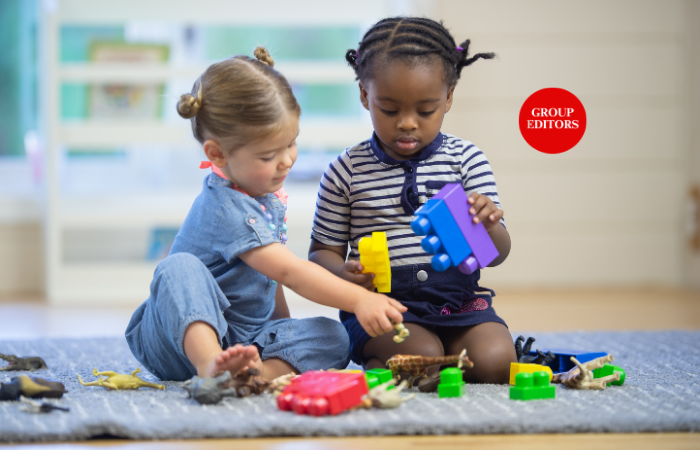
LIFESTYLE NEWS - While many parents place a strong emphasis on academic success, experts say one of the most important influences on a child's development happens through everyday social interaction.
According to Linique Hanekom, a speech-language therapist at the Centre for Health & Human Performance in the Faculty of Health Sciences at the North-West University (NWU), regular interaction with parents, caregivers and peers plays a vital role in children's language development, emotional wellbeing and ability to form healthy relationships.
"Social interaction is far more than simply socialising. It is a fundamental component of development throughout the lifespan," says Hanekom.
Early years lay the foundation
Research shows that interactions between young children and the people around them influence how they learn, communicate and regulate their emotions.
From infancy, simple activities such as talking, playing, making eye contact and responding to a child's attempts to communicate help build important developmental skills.
"From a very young age, parent-child interactions lay the foundation for how children communicate, build relationships and understand the world around them," Hanekom explains.
These early experiences support language development, emotional regulation, problem-solving skills and healthy relationship building.
The importance of 'serve and return'
Hanekom highlights the concept of "serve and return" interactions, promoted by the Harvard Centre on the Developing Child.
This occurs when a child babbles, points, gestures or makes sounds and an adult responds appropriately.
"When a child makes a sound, points, babbles or uses a gesture, and an adult responds in a sensitive and appropriate way, neural connections in the brain are strengthened," she says.
These repeated interactions help develop language, memory, attention and emotional regulation.
Limited interaction can affect development
A lack of meaningful social interaction can have lasting consequences.
According to Hanekom, children and teenagers who have limited opportunities to engage with others may experience:
- Speech and language delays.
- Increased stress and anxiety.
- Poor emotional regulation.
- Slower cognitive and social development.
- Difficulty building relationships.
Social needs change as children grow
During early childhood, play and responsive communication remain the most effective ways for children to learn.
"Young children learn best through play and interaction with responsive caregivers who react sensitively to their sounds, gestures and attempts to communicate," Hanekom says.
As children enter adolescence, social interaction continues to play an important role, although the focus shifts towards identity, confidence and emotional wellbeing.
"For teenagers, social interaction is central to the development of identity, self-esteem and mental health," she explains.
Positive relationships with peers help young people develop independence, confidence and a sense of belonging.
Without these opportunities, teenagers may be more vulnerable to loneliness, anxiety and low self-esteem.
Balancing screen time with real-life connection
With many children spending increasing amounts of time on digital devices, Hanekom believes parents, educators and caregivers have an important role to play in encouraging meaningful face-to-face interaction.
"Parents, educators and caregivers play a decisive role in facilitating social interaction by deliberately creating opportunities for meaningful, responsive and reciprocal communication," she says.
She adds that encouraging healthy social interaction is just as important as supporting academic achievement.
"The promotion of healthy social interaction should be regarded as a priority – not only for academic success, but for the development of resilient, emotionally healthy and socially competent individuals," Hanekom concludes.
‘We bring you the latest Garden Route, Hessequa, Karoo news’