

EASTERN CAPE NEWS - More than 400 farmers, young people, community members and institutional partners gathered at Phawu Agri Park on 26 February for an agroecology awareness day aimed at translating national policy into practical community action.
The event was supported by the Seriti Institute in partnership with a range of civil society agroecology networks and organisations in the Eastern Cape.
These included the Zingisa Educational Project, Agroecology Action Collective, Eastern Cape Agroecology Farmers Association, Abanebhongo People with Disabilities, the South African Organic Sector Organisation, Food and Trees for Africa, as well as the Agricultural Research Council and the National Department of Agriculture.
The strong turnout reflected growing interest in agroecology as a practical response to climate change, food insecurity and rural economic vulnerability across the province.
It also demonstrated the impact it can have when institutions and grassroots movements work together.
Throughout the day, the grounds of Phawu Agri Park became a lively space of learning and exchange.
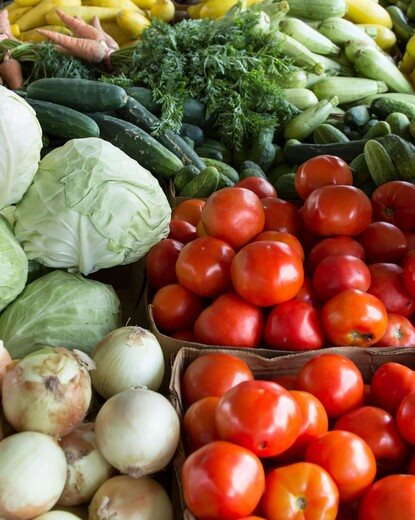
Farmers exhibited vegetables, herbs, seeds and seedlings grown according to agroecological principles.
Live demonstrations showcased soil regeneration practices, biodiversity restoration techniques and sustainable farming methods rooted in indigenous knowledge.
Seed-sharing tables allowed rare and locally adapted varieties to change hands, strengthening biodiversity and reinforcing community seed sovereignty.
Farmer-to-farmer exchanges created opportunities for hands-on learning, while networking spaces buzzed with discussions about markets, training opportunities and collaborative projects.
A key theme that emerged was local production for local consumption - a model that supports both food security and food sovereignty.
Many participants described the day as a visible shift towards community-led solutions.
“The day filled our hearts with hope,” said young farmers Samkelisiwe Ncedo and Snawe Mpisane.
“Sharing what we grow with our own hands and seeing other farmers excited about our seeds reminds us that we are not alone.
People are hungry not only for healthy food, but also for knowledge and connection.”
Bakhusele Mathupha, founder of Phawu Agripak and chairperson of the South African Organic Sector Organisation, said the platform promotes the practical implementation of the National Agroecology Framework.
“What we witnessed here is a remarkable example of the impact of collaboration,” he said. He added that the scale of participation shows agroecology is gaining real traction in the Eastern Cape.
“When knowledge institutions, community networks and grassroots farmers share the same space, innovation happens.
The demonstrations, seed exchanges and farmer-to-farmer learning sessions show that solutions already exist within our communities.
Collaboration strengthens those solutions and allows them to grow.”
The day underscored the power of collective action.
While no single farmer or organisation could create such momentum alone, together they are building a resilient support system from seed to soil to table.
The agroecology awareness and exhibition day was a living demonstration that a more sustainable, community-driven food system is already taking root in the Eastern Cape - one grounded in co-peration, resilience and dignity.
‘We bring you the latest Garden Route, Hessequa, Karoo news’